
These policy shifts are compelling market participants to balance cost control with compliance and supply chain reliability. This brick industry is embedded with all sorts of competitors, continuously showcasing milestones of companies that have other kinds of strengths and bring forth different innovations. From Bigbloc Construction Ltd. in North America to the Brampton Brick in Europe, all these substantial contributors have been major components in the technological advancement and market expansion alike. The report on the market includes an assessment of the market, trends, segments, and regional markets.
- Standard size bricks are widely used to construct houses and buildings as they allow uniformity and consistency in construction projects.
- The concrete segment is anticipated to expand at a significant CAGR of 4.1% during the projected period.
- WILCO works with 3rd parties and resellers directly to collect and aggregate sales figures on the LEGO market and secondhand LEGO economy.
- Such bricks are generally made from recycled materials or produced by energy-efficient means and, thus, are more attractive to green consumers and regulatory institutions.
- The construction boom in countries such as China and India further solidifies Asia-Pacific as a key market for bricks, with the potential for continued expansion in the future.
GROWTH FACTORS
The expansion of infrastructure and building activities has propelled the brick sector in India to see significant growth during the past few years. The possibilities for the expansion of the blocks and bricks business have also been boosted by India’s increasing population, increased per capita income, enhanced economic growth, industrialisation, and quickening urbanisation. Clay bricks, a fundamental category in the bricks market, are crafted from natural clay, typically through the firing process. These bricks are renowned for their durability, thermal insulation properties, and traditional aesthetic appeal, making them a staple in construction. Manufacturers are exploring energy-efficient kiln technologies and incorporating recycled content, aligning with the industry’s green initiatives. The global brick market will further evolve as construction technologies and sustainable building practices are invented.
Take The Bus: Boston To Newport
Brick Lane’s markets are a true haven for antique treasure hunting, vintage shopping, and street food exploration. The brick industry is positioned for continued evolution as innovation, environmental imperatives, and trade dynamics converge. Senior decision-makers can leverage these insights to refine strategy and strengthen competitive advantage in a dynamically shifting market. The Asia Pacific region is expected to see significant growth in the Bricks market in the coming years due to the growth of the construction industry in the region. Increasing government expenditure for reconstruction & repair of infrastructureis expected to drive the market.

The region’s robust economic development has led to a surge in demand for affordable housing and commercial spaces, driving the need for construction materials like bricks. Moreover, supportive government initiatives, coupled with a rising population, contribute to sustained growth. The construction boom in countries such as China and India further solidifies Asia-Pacific as a key market for bricks, with the potential for continued expansion in the future. The market is highly competitive, driven by a combination of established players, regional manufacturers, and innovative startups. The focus on sustainability and eco-friendly construction practices has spurred innovation in the market. Startups and smaller manufacturers have entered the market with a focus on producing environmentally responsible bricks.
Who Are The Major Players In The Bricks Market?
The demand for sustainable and energy-efficient buildings has led to an increased demand for clay and concrete bricks, creating opportunities for growth in the Bricks market. Moreover, the growth of the construction industry in emerging economies is also providing opportunities for market growth. Based on application, the market is segmented into residential building, commercial building, infrastructure, path, parterre, and landscaping.
- 3D-printed schemes such as Mvule Gardens in Kenya demonstrate how fly-ash-based mortars can accelerate production; each two-bedroom shell is printed in 18 hours.
- Based on application, the market is segmented into residential building, commercial building, infrastructure, path, parterre, and landscaping.
- Clay bricks, a fundamental category in the bricks market, are crafted from natural clay, typically through the firing process.
- Forterra’s completion of Europe’s largest brick plant at Desford raises UK capacity and embeds advanced slip-extrusion lines for panelization compatibility.
- Plus, small business owners are able to put their own stamp on their stall by decorating them however they see fit and giving them the edge in contrast to regular, council-led markets.
Bricks Market Companies
Enhanced durability and resistance to environmental elements also make contributions to longer product lifespans, increasing their fee proposition. By integrating current technologies and addressing evolving market needs, those improvements force expanded adoption and stimulate a boom inside the market. In the bricks market, the modular segment refers to bricks that adhere to standardized dimensions, facilitating easy and precise construction. This segment is characterized by uniformity in size, allowing for efficient assembly and reducing construction time.
Malaysia Bricks And Blocks Market Synopsis
Dealers respond by specializing in colored or antique-finish bricks with value-added design services, protecting margins even as high-rise contractors bypass intermediaries. Market participants expect hybrid models where manufacturers run direct key-account teams while maintaining dealer partners for patchwork residential demand. As labor shortages intensify, builders in North America and Europe pivot toward volumetric modules that sideline brick facades.
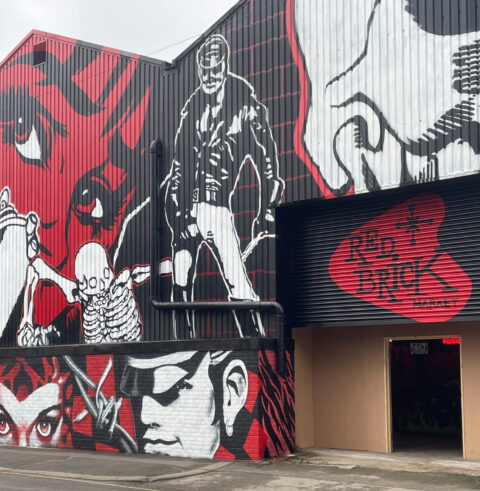
Brick Lane Food Market
Therefore, jumbo bricks have a utility where fast construction progress and superior aesthetics are required in building purposes—like high-rise buildings or large commercial complexes. This scenario of building solutions with personalization fits into the changed preferences of property developers and homeowners for unique though durable building materials. The study encompasses a comprehensive SWOT analysis and provides insights into future developments within the market.

The market is open seven days a week from 11am to 11pm so you can always count on Ely’s Yard for some good grub if you’re in the area. If you’re looking for some bric-a-brac treasure, hunting for a bargain, antique shopping, or in the mood for endless street food options then the bustling Brick Lane Market is the place to be. Technically it’s a number of markets that all stretch the length of Brick Lane that are open both on weekdays and weekends, although Sundays are when the markets really come alive. Once you’ve worked up an appetite and you start to feel peckish, do not fret, you’ll find plenty of treats at London’s top food markets in Brick Lane to wolf down in delight. Now that we’ve taken a look into the different markets Brick Lane has to offer, let’s take a look at what you’ll find in and out of the stalls.

With the United States needing another 501,000 skilled workers in 2025, contractors view standard panels as risk hedges. Thin-brick slips and mechanically fixed veneers let masonry suppliers stay relevant, yet overall unit demand dips where full-bed bricks are displaced. Manufacturers invest in robotic laying lines to service hybrid wall panels but must amortize capital across a shrinking traditional volume base, squeezing margins. In October 2021, Wienerberger successfully finalized the purchase of Meridian Brick in the North American market, encompassing their operations in both the United States and Canada.
The brick market size for path and paving solutions, however, is expanding at a 3.14% CAGR as households invest in outdoor upgrades and municipalities retrofit sidewalks to endure heavier pedestrian flows. Architectural innovation is creating significant opportunities in the bricks market by redefining traditional construction practices. Collaborations between architects and brick manufacturers have led to the development of innovative designs that go beyond conventional rectangular shapes. Bricks are now available in unique forms, sizes, and textures, allowing architects to explore creative possibilities in modern construction.
The global bricks market size accounted at USD 1.74 trillion in 2024 and is expected to be worth around USD 2.36 trillion by 2034, at a CAGR of 3.09% from 2025 to 2034. Different regions around the world have their own brick manufacturing traditions, leading to unique brick types and production methods. For instance, traditional hand-made bricks in some parts of the world coexist with highly automated brick manufacturing facilities in others. The SPER Market Research report seeks to give market dynamics, demand, and supply forecasts for the years up to 2030. Whether in gardens or parks, or even in urbanwalkways, bricks provide a hardwearing surface for pedestrian traffic. They bring outdoor spaces into their own with a touch of elegance to the visible surroundings, thereby wedding utility with beauty.
Application
The global brick market is expected to grow at the back of urbanization, infrastructure development, and growing emphasis on sustainable construction material. Any improvement in brick production technology pertains to increased efficiency and lower environmental impact, hence sustainability goals globally. These developments are likely to define the future of the brick industry in a number of ways and affect how bricks will be used and viewed in construction and design.. Meanwhile, Europe is experiencing notable growth in the bricks market due to a resurgence in construction activities, driven by urban development projects and infrastructure investments. The region’s focus on sustainable and energy-efficient construction aligns with the eco-friendly attributes of modern bricks. Additionally, stringent building regulations promoting durability and thermal insulation contribute to increased brick usage.