
The increasing prevalence of cardiovascular diseases, cancer, diabetes, and neurological disorders is fueling the demand for innovative treatments and personalized medicine. Companies also invest in artificial intelligence (AI), big data analytics, and real-world evidence (RWE) research to enhance drug discovery and market access. Majority of investments in the US pharmaceutical market, companies primarily target drug discovery and development. According to the Pharmaceutical Research and Manufacturers Association (PhRMA), pharmaceutical companies in the US perform more than half of the world’s R&D, with investments totaling ~US$ 75 billion, and they hold intellectual property rights on most of the new pharmaceuticals.

Oral-route drugs increase patient medication adherence and eliminate the need for trained professionals to administer drugs. Thus, off-patent, off-exclusivity drugs play a crucial role in the generic drugs market by promoting competition, affordability, and treatment access. They offer cost savings for patients and healthcare systems, drive market competition and innovation, and contribute to the sustainability of healthcare systems.

Share This Report With Your Colleague Or Friend
With our expertise and commitment to excellence, we are your trusted partner in unlocking the potential of your business. Whether you need deeper insights into a particular region, industry segment, competitor analysis, or data cut, our research team can tailor the report accordingly. Please share your requirements with us, and we’ll be happy to provide a customized proposal or scope. By route of administration, the oral segment secured the largest share of the market in 2023. The most popular method of medication delivery is oral since it is non-invasive, highly patient-complied with, economical, easy to use, and doesn’t require any special sterile conditions.
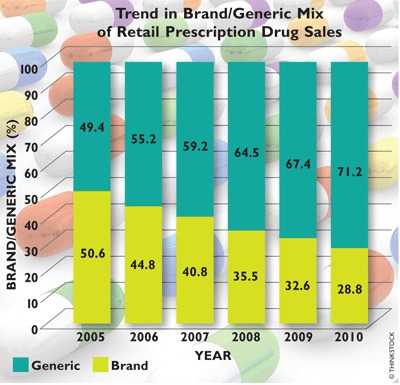
Medicare Part D Sees Largest Volume Growth Among Payment Methods
By therapeutic application, the diabetes segment held a dominant presence in the generic drugs market in 2024. The rising prevalence of diabetes and increasing healthcare costs of diabetes treatment necessitate the use of generic drugs. Diabetes is non-curable but can go into remission, i.e., the body does not show any signs of diabetes, but the disease is still present. Generic drugs can drastically reduce the financial burden on low- and middle-income groups and increase medication adherence. Furthermore, funding supports generic drug manufacturers in expanding their market reach and distribution networks. It enables them to establish partnerships and collaborations with wholesalers, distributors, and healthcare providers to ensure the availability and accessibility of generic drugs to patients.
Data collection and base year analysis are done using data collection modules with large sample sizes. The stage includes obtaining market information or related data through various sources and strategies. It likewise envelops the examination of information inconsistencies seen across different information sources. Also, market share analysis and key trend analysis are the major success factors in the market report.
US Pharmaceutical Strategic Insights
Also, a number of therapeutics used in the treatment of critical diseases, such as cancers and orphan diseases, can only be administered intravenously by trained medical professionals. Such effective administration of therapeutics often allows for the appropriate treatment and management of critical diseases, leading to improved clinical outcomes. By end-user, the hospital pharmacies segment held the major revenue share of the drugs market in 2024. As the rising geriatric population with chronic conditions, demand for hospital care and specialized medications, which are widely dispensed in hospital pharmacies. Also, the increasing road accident cases and complex conditions require widespread hospitalizations, resulting in more medication prescriptions and dispensing from hospital pharmacies are impacting ultimately growth of the market. Around the world, an increasing geriatric patients with chronic conditions like cardiovascular diseases, diabetes, and cancer, with technological advancements in drug development, are driving the market growth.
Global Prescription Drugs Market Snapshot & Highlights
However, Patent expiration of key pharmaceutical drugs has emerged as a significant restraint for the growth of the U.S. pharmaceutical industry. Once patents expire, generic versions of these drugs can enter the market, often leading to a sharp decline in sales for the original branded drugs. For instance, in January 2023, the patent for AbbVie’s blockbuster drug Humira (adalimumab), which generated over USD 20 billion in annual sales, expired, allowing biosimilars to compete. The shift from branded to generic drugs reduces the market share of originator companies and significantly impacts their revenue streams. The overall market dynamics are also affected by the pricing pressure brought on by these generics, forcing branded companies to reduce prices or find new market niches.
The leading companies in the pharmaceutical and drug development industries are always focusing on developing and upgrading existing technologies that serve to enhance patient outcomes and significantly increase healthcare effectiveness and efficiency. For Instance, in May 2023, Pfizer Inc. received FDA approval for PAXLOVID (nirmatrelvir tablets and ritonavir tablets) used for the treatment of patient with mild-to-moderate COVID-19. Moreover, the company also announced plans to launch 10 new formulations in the market including two oncology and immuno-inflammation medication each, and five vaccines in 2023.
Please Fill Out The Form Below For A Free PDF Report Sample & Online Dashboard Trial
Since 2007, 30 biosimilars have been launched in the U.S., with 10 more approved and set to launch by the end of 2023. While prescription drugs offer significant benefits in managing illnesses and improving patients’ quality of life, it is essential to use them responsibly to minimize potential risks and side effects. Four decades of unabated growth in drug-related fatalities in the United States shows an escalating public health crisis, though drug use prevalence has not shown much increase since 2002. The national overdose growth rate, remarkably constant over the period and roughly doubling every eight years, is apparently impervious to shifts in policy interventions. Even the emergence and decline of specific drugs has little effect; deadly as fentanyl is, statistically, it looks merely like an extension of what was even in 2015 a 35-year trend.
On the basis of distribution channel, the prescription drugs market is segmented into hospital pharmacy, retail pharmacy, online pharmacy, and others. The hospital pharmacy segment led the market with a share of 42.1% in 2024, due to centralized drug dispensing and institutional procurement. The online pharmacy segment is projected to record the fastest CAGR of 9.2% from 2025 to 2032, fueled by growing digital health trends, doorstep delivery models, and convenience for chronic users. On the basis of route of administration, the prescription drugs market is segmented into oral, topical, parenteral, and others. The oral segment accounted for the largest revenue share of 51.2% in 2024, due to ease of use and widespread application in chronic disease management.
Prescription Drugs Market Regional Analysis
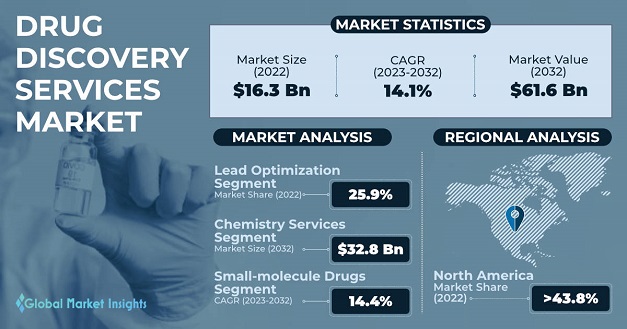
The availability of off-patent and off-exclusivity drugs contributes to increased accessibility to essential medications and competition in the pharmaceutical market. The generic drugs segment is anticipated to grow at the fastest CAGR of 7.4% from 2025 to 2032, driven by patent expirations, increasing demand for cost-effective treatments, and favorable regulatory support. The high patient preference for oral route administration and cost-effectiveness of manufacturing oral formulations further bolstered the segment growth.
- Based on product type, the market is segmented into generic drugs, orphan drugs, and other prescription drugs.
- Companies prioritize research and development to address unmet medical needs and comply with evolving regulatory standards.
- The oncology segment held the highest U.S. prescription drugs market share among therapy areas.
- Additionally, expanding into emerging markets, both domestically and inteationally, can help diversify the customer base and reduce reliance on saturated markets.
- In addition, the need for targeted drug delivery and patient-specific therapies contributes to the parenteral segment’s market expansion.
- By incentivizing competition, it ispossible to foster innovation and improve the stability of a market, in turnincreasing access and affordability of products.
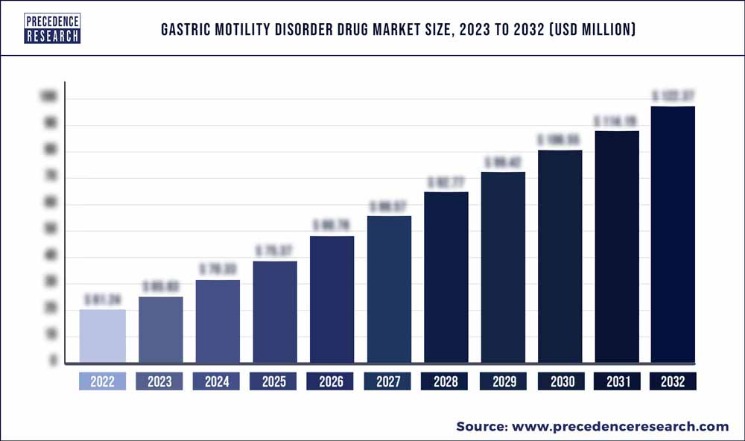
To recoup their high development expenses, pharmaceutical corporations usually keep a patent for 20 years. The pharmaceutical sector in India is a major player in the worldwide pharmaceutical market. About 40% of the US’s generic needs, more than 50% of Africa’s generic needs, and about 25% of the UK’s total drug supply come from India. India is also a major provider of DPT, BCG, and measles vaccinations, and it supplies around 60% of the world’s vaccine orders. India supplies 70% of the vaccines used by the WHO (according to the essential immunization schedule). Businesses that find, develop, produce, distribute, and sell pharmaceutical goods are referred to as pharmaceutical industries.
As summarized by Johnson and colleagues (2000), the New York drug market had been through several transformations between 1960 and 2000 with varying degrees of organization. For other cities, there are just occasional studies such as those about in Milwaukee (Hagedorn, 1998), Chicago (National Drug Intelligence Center, 2007a), and Los Angeles (National Drug Intelligence Center, 2007b). This uncertainty by both consumers and sellers about the real price and purity of drugs may have important implications for the behavior of the market. Reuter and Caulkins (2004), using a model of the market for “lemons” (products whose quality is difficult for the buyer to determine Akerlof, 1970), present a set of conjectures as to the sources and consequences of this uncertainty. For example, it encourages customers to purchase regularly from more than one seller in order to obtain information about the relative quality-adjusted price of their principal source.
The ongoing expiration of patents on branded drugs is shifting patients toward generic drugs. The rising prevalence of chronic disease drives the need for affordable medications since chronic diseases require long-term medications, which leads to increased healthcare costs. Additionally, government initiatives promoting the use of generic drugs in order to reduce healthcare costs play a major role in boosting the manufacturing of generic drugs. The pharmaceutical market is witnessing transformative growth due to various factors like rising cases of chronic disease, growth of aging population, and rising prevalence of age-related disease. Government support and investments in research & development, wider use of biologics and biosimilars and increased healthcare spending further support market growth.